
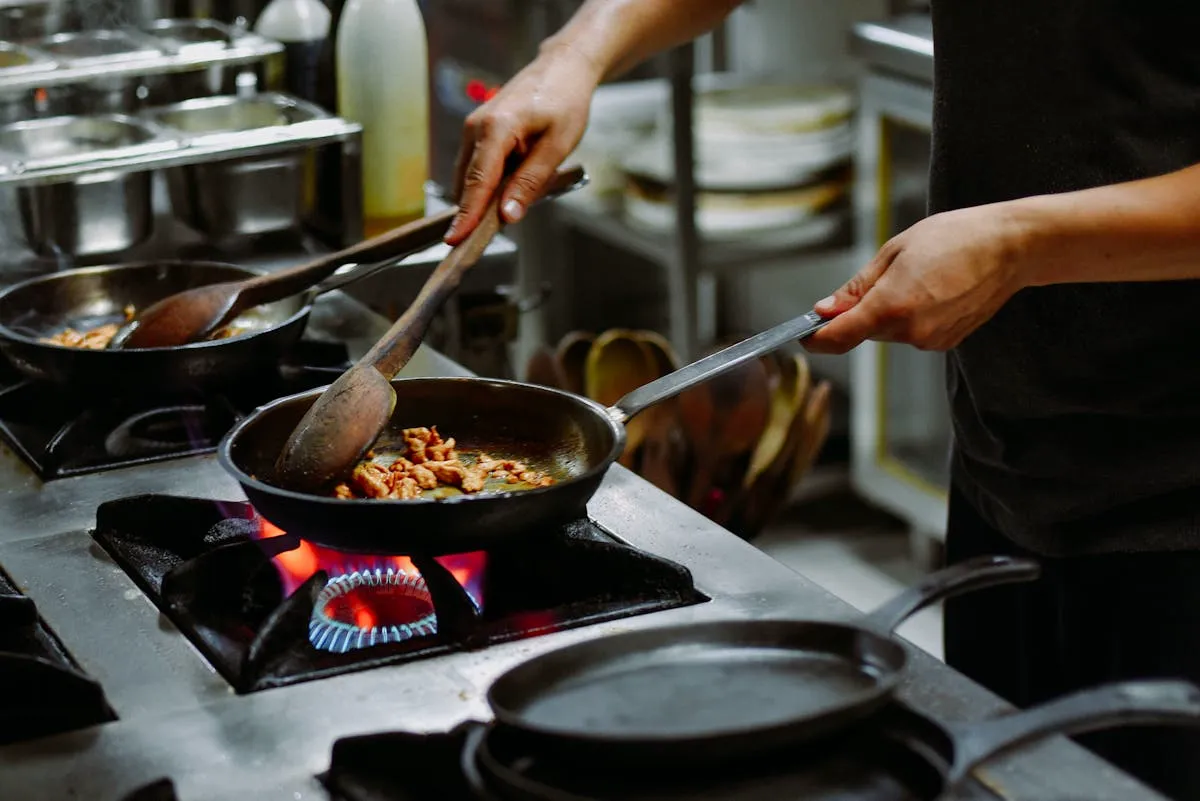
Running a restaurant in California means managing tight margins while navigating one of the most complex tax environments in the country. Between federal tax rules and California-specific regulations, it is easy to overlook deductions that could save your business thousands of dollars each year.
The good news is that nearly every operating expense in a restaurant, from the food you purchase to the equipment in your kitchen, offers a potential tax benefit. The key is knowing which deductions apply, how California’s tax code differs from federal rules, and what documentation you need to keep.
This article breaks down the most valuable tax deductions for restaurants in California so you can lower your tax bill and keep more of your revenue working for your business.
Key Takeaways
- Cost of goods sold (COGS) is typically a restaurant’s largest deduction, often representing 28% to 35% of total revenue.
- Section 179 allows California restaurant owners to expense qualifying kitchen equipment purchases up to $1,220,000 in the year they are placed in service.
- The FICA tip credit lets restaurant owners claim a federal tax credit on the employer portion of FICA taxes paid on employee tips exceeding the federal minimum wage.
- California does not conform to all federal meal deduction rules, so restaurant owners need to track deductions at both the state and federal level.
- Charitable food donations under IRC Section 170(e)(3) offer an enhanced deduction that can exceed the cost basis of donated inventory.
What Counts as a Tax Deduction for Restaurants?
A tax deduction reduces the amount of income your restaurant is taxed on. If your restaurant brings in $1.2 million in revenue and you claim $900,000 in deductions, you only pay taxes on $300,000.
Restaurant deductions generally fall into two buckets:
- Operational expenses are deductible in the year you pay them. These include food costs, wages, rent, utilities, and marketing.
- Capital expenditures are deducted over time through depreciation. These include kitchen equipment, furniture, leasehold improvements, and building upgrades.
Understanding this distinction matters because it affects your cash flow and how much you can write off in a given tax year.
Cost of Goods Sold: Your Largest Deduction
For most restaurants, cost of goods sold (COGS) is the single biggest tax benefit. COGS includes every direct cost tied to what your restaurant sells:
- Raw ingredients and food purchases
- Beverages, including alcohol
- Packaging materials and takeout containers
- Condiments, garnishes, and cooking supplies
- Employee meals pulled from inventory
COGS reduces your gross income before other deductions are applied. If your restaurant does $1.2 million in revenue and your COGS is $400,000, your gross profit starts at $800,000 before any other write-offs come into play.
Documentation tip: Keep detailed purchase records, supplier invoices, and regular inventory counts. The IRS expects restaurants to use either the FIFO (first in, first out) or specific identification method for tracking inventory costs.
Section 179 and Equipment Depreciation
Kitchen equipment represents a major investment for any restaurant. Section 179 of the tax code allows you to deduct the full purchase price of qualifying equipment in the year it is placed in service, rather than spreading the deduction across several years through standard depreciation.
Qualifying restaurant equipment includes:
- Commercial ovens, ranges, and fryers
- Walk-in coolers and refrigeration units
- Dishwashers and food prep stations
- Point-of-sale (POS) systems and technology
- Furniture, booths, and dining room fixtures
For tax year 2025, the Section 179 deduction limit is $1,220,000. California has its own Section 179 limit, which has historically been lower than the federal cap. For 2025, California conforms to a maximum Section 179 deduction of $1,220,000, though this can change year to year, so verify with your tax advisor.
Bonus depreciation is another option. At the federal level, businesses can currently deduct a percentage of the cost of qualifying assets in the first year. However, California does not conform to federal bonus depreciation rules. This means a purchase that is fully deductible on your federal return may need to be depreciated over several years on your California return.
This disconnect between federal and state depreciation rules is one of the most common areas where California restaurant owners either miss savings or create filing errors.
The FICA Tip Credit
The FICA tip credit is one of the most valuable and most overlooked tax benefits for restaurants with tipped employees. Here is how it works:
- Your employees receive tips as part of their compensation.
- As an employer, you pay the employer share of FICA taxes (Social Security and Medicare) on those tips.
- For tips that exceed the amount needed to bring an employee up to the federal minimum wage ($7.25/hour), you can claim a dollar-for-dollar tax credit on your federal return.
For a restaurant with 20 tipped employees, this credit can add up to tens of thousands of dollars annually. The credit is claimed on IRS Form 8846 and directly reduces your federal tax liability, not just your taxable income.
California note: California’s minimum wage is $16.50 per hour (as of January 2025) for most employers and $20.00 per hour for fast food restaurant employees. Since the FICA tip credit is a federal credit based on the federal minimum wage, California restaurant owners often have a larger gap between the federal minimum and actual wages, which can increase the credit amount.
Employee and Labor Cost Deductions
Labor is typically the second-largest expense for restaurants after food costs. Fortunately, most employment-related expenses are fully deductible:
- Wages and salaries for all employees, including kitchen staff, servers, bartenders, hosts, and managers
- Health insurance premiums you pay on behalf of employees
- Workers’ compensation insurance premiums
- Employer payroll taxes (the employer portion of Social Security, Medicare, and California unemployment insurance)
- Employee training costs, including food safety certifications and ServSafe courses
- Uniforms and work clothing you provide to staff
If you offer retirement benefits such as a SIMPLE IRA or SEP IRA, your employer contributions are also deductible. These plans can serve double duty by reducing your tax bill and helping with employee retention in a competitive labor market.
Rent, Utilities, and Facility Costs
If you lease your restaurant space, your monthly rent payments are fully deductible as a business expense. Related facility costs that qualify include:
- Gas, electric, and water utilities
- Trash and grease trap removal services
- Property insurance premiums
- Common area maintenance (CAM) charges
- Pest control services
- Cleaning and janitorial supplies
Leasehold improvements deserve special attention. If you invest in renovating your restaurant space, such as adding a new bar, upgrading the kitchen layout, or improving the dining area, these improvements are classified as capital expenditures. They are depreciated over 15 years for qualified improvement property. Section 179 may also apply to certain leasehold improvements, allowing you to expense them in the year they are completed.
Marketing and Advertising Deductions
Every dollar you spend promoting your restaurant is generally 100% deductible in the year you spend it. Common marketing deductions for restaurants include:
- Social media advertising and paid search campaigns
- Menu design and printing costs
- Professional food photography
- Website development and maintenance
- Delivery platform commissions (DoorDash, Uber Eats, Grubhub)
- Event sponsorships and community partnerships
- Signage, banners, and exterior branding
If you offer free food samples or host promotional tasting events, the cost of the food used is also deductible as a marketing expense rather than a meal expense, which means it may qualify for a full 100% deduction rather than the standard 50% limit on business meals.
Charitable Food Donations
Restaurants that donate surplus food to qualified 501(c)(3) organizations can claim an enhanced deduction under IRC Section 170(e)(3). This is especially relevant in California, where state law actively encourages food waste reduction.
The enhanced deduction allows you to deduct the lesser of:
- Twice the cost basis of the donated food, or
- The cost basis plus half the fair market value of the food
This means you may be able to deduct more than what the food actually cost you to purchase. The deduction is capped at 15% of your net income from the business.
Requirements:
- The food must go to a qualified nonprofit that serves the ill, needy, or infants
- The food must meet all quality and labeling standards at the time of donation
- You need a written acknowledgment from the receiving organization
Beyond the tax benefit, food donations can help your restaurant build positive community relationships and reduce waste disposal costs.
California-Specific Tax Considerations
Operating a restaurant in California introduces several state-level tax factors that differ from federal rules:
Sales and Use Tax
California restaurants must collect sales and use tax on most food and beverage sales. The base statewide rate is 7.25%, but local rates can push the total above 10% in some counties. While sales tax is collected from customers and remitted to the state, improper handling of sales tax can lead to penalties that eat into your margins.
Key distinctions to track:
- Hot prepared food is taxable
- Cold food sold to go is generally exempt
- Catering services are taxable
- Tips left voluntarily by customers are not subject to sales tax, but mandatory service charges are
California Nonconformity on Meals
California does not fully conform to federal meal deduction rules. At the federal level, most business meals are 50% deductible. California follows the same 50% limitation for most meals, but the state did not adopt the temporary 100% deduction for restaurant meals that existed at the federal level for 2021 and 2022.
This means you may need to maintain separate tracking for federal and California meal deductions, particularly if your records from prior years carried forward different deduction amounts.
California Franchise Tax
Restaurants structured as corporations or LLCs are subject to California’s minimum franchise tax of $800 per year, regardless of whether the business is profitable. S corporations also pay a 1.5% tax on net income (minimum $800). These are state-level obligations that exist in addition to federal income tax.
Insurance Deductions
Restaurant insurance premiums are fully deductible. Common policies include:
- General liability insurance
- Liquor liability insurance (essential for restaurants serving alcohol)
- Property insurance
- Business interruption insurance
- Workers’ compensation (also required by California law)
- Commercial auto insurance for delivery vehicles
- Cyber liability insurance (if you process credit cards or online orders)
Liquor license amortization: If you purchased a liquor license, the cost can be amortized over 15 years as an intangible asset. This annual write-off is easy to overlook but adds up over the life of the license, especially in California where licenses can be expensive depending on the type and county.
Professional Services
The fees you pay to accountants, attorneys, bookkeepers, and other professionals are fully deductible. For restaurants, this typically includes:
- CPA and tax planning fees
- Legal fees for lease reviews, employment matters, or licensing
- Payroll processing service fees
- Bookkeeping and accounting software subscriptions (QuickBooks, Xero, Restaurant365)
- Health department and food safety consulting
These costs directly support your business operations and are deductible in the year you pay them.
The Qualified Business Income Deduction
Restaurant owners who operate as sole proprietors, partnerships, S corporations, or LLCs may qualify for the Qualified Business Income (QBI) deduction under Section 199A. This allows eligible business owners to deduct up to 20% of their qualified business income on their personal tax returns.
The QBI deduction is subject to income thresholds and limitations based on W-2 wages paid and the value of qualified property. For restaurant owners who pay significant wages and invest in equipment, these factors often work in their favor.
This deduction is taken on your personal return and does not appear on the business return itself, so it is important to work with a CPA who understands how to calculate and optimize it.
How to Keep Track of Restaurant Tax Deductions
Strong recordkeeping is the foundation of maximizing deductions and surviving an audit. Here is a practical framework for restaurant owners:
- Separate business and personal expenses. Use dedicated business accounts for all restaurant purchases.
- Categorize expenses consistently. Break costs into COGS, labor, rent and utilities, equipment, marketing, insurance, and professional services.
- Keep receipts and invoices. Digital copies are acceptable. Match every expense to a receipt.
- Run regular inventory counts. Monthly counts help ensure your COGS calculations are accurate.
- Track tips and payroll data. Accurate tip reporting is essential for claiming the FICA tip credit.
- Work with a CPA who knows restaurants. Industry-specific expertise ensures you claim every deduction you are entitled to and stay compliant with both federal and California rules.
Frequently Asked Questions
What is the biggest tax deduction for restaurant owners?
Cost of goods sold (COGS) is almost always the largest deduction for restaurants. It typically represents 28% to 35% of total revenue and reduces gross income before other deductions are applied.
Can California restaurant owners use Section 179 for kitchen equipment?
Yes. California restaurant owners can use Section 179 to expense qualifying kitchen equipment in the year it is placed in service. The 2025 federal limit is $1,220,000. California has its own conformity rules, so confirm the current state limit with your CPA.
How does the FICA tip credit work for restaurants?
The FICA tip credit allows restaurant employers to claim a dollar-for-dollar federal tax credit on the employer portion of FICA taxes paid on employee tips that exceed the federal minimum wage of $7.25 per hour. It is claimed on IRS Form 8846.
Does California follow federal meal deduction rules?
California follows the federal 50% limitation on most business meal deductions. However, the state did not adopt the temporary 100% restaurant meal deduction that existed at the federal level in 2021 and 2022. Owners should track federal and state meal deductions separately.
Are food donations tax deductible for restaurants in California?
Yes. Restaurants that donate surplus food to qualified 501(c)(3) organizations can claim an enhanced deduction under IRC Section 170(e)(3). The deduction can exceed the cost basis of the donated food, up to 15% of net business income.
Running a restaurant is demanding enough without worrying about whether you are claiming every deduction available to you. At Clear Peak Accounting, we work with restaurant and food service businesses across California to maximize tax savings and keep your finances on solid ground.
For related guidance from Clear Peak Accounting, see our resources on accountant for restaurants.
Schedule a consultation to find out how we can help your restaurant pay less in taxes and plan for a stronger year ahead. Call us at (424) 430-3272 or connect with us online.