
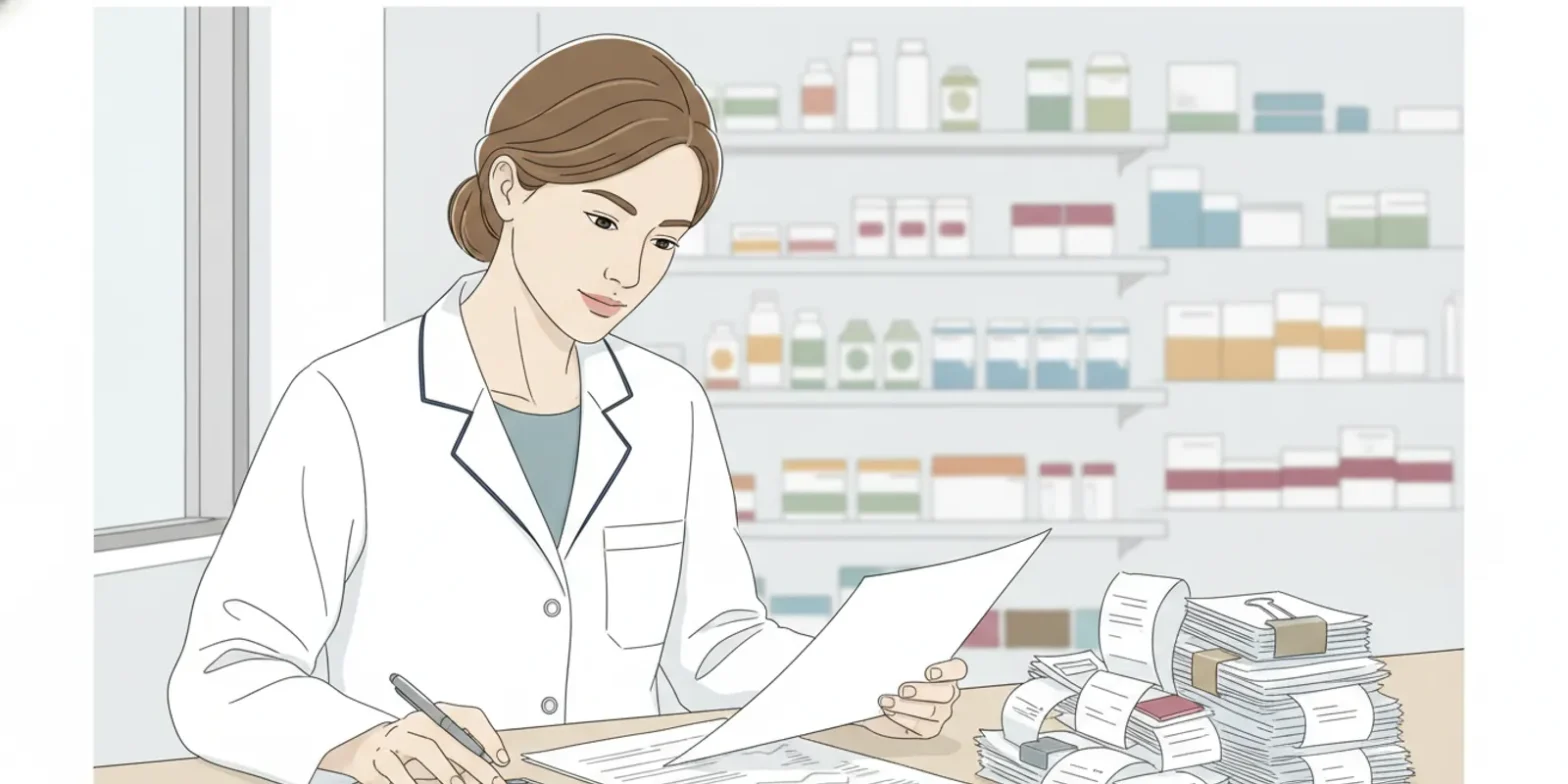
California tax deductions for pharmacists employees depend on tax-year rules, filing status, income, and whether an expense was reimbursed. A work-related purchase is not automatically deductible. For a pharmacist paid on a W-2, begin by separating ordinary job costs from other tax items that may qualify under their own rules, then compare the federal and California calculations.
Explore tax planning and accounting services
Which expenses are job costs, and which may affect a return?
Pharmacists may pay for license renewals, continuing education, professional memberships, uniforms, equipment, and travel. These costs can be necessary for work without being deductible as unreimbursed employee expenses on an individual federal return. Federal law generally suspends miscellaneous itemized deductions, including most unreimbursed employee expenses, for tax years 2018 through 2025. Because rules can change after that period, confirm the law and instructions for the specific return year instead of assuming the same treatment continues.
California treatment must be checked separately. State law may not match federal law for every item or year, so do not copy federal figures mechanically. Use the applicable California Schedule CA (540) instructions to identify adjustments. The Franchise Tax Board’s 2025 Schedule CA instructions explain how to make California adjustments for that year; use the corresponding current-year materials when filing a different year.
A useful first distinction is whether the expense was paid personally, reimbursed by an employer, or covered through a tax-favored account. Do not count the same cost twice. If a pharmacy reimburses an eligible expense, retain the reimbursement record and follow the employer’s documentation process. A personal deduction, where available, generally cannot also be claimed for the reimbursed portion.
What should you check before treating a work expense as deductible?
Review each expense using four questions. First, what was bought and when? Second, was it required for your job, personal, or mixed-use? Third, did the employer reimburse any amount? Fourth, what does the applicable federal and California tax-year guidance say? These checks keep the fact that a cost feels occupational from becoming the only basis for a tax decision.
For example, a license renewal receipt and proof of payment establish that a pharmacist paid a fee, but do not by themselves establish a tax deduction. An employer policy or reimbursement request may be more immediately useful. Similarly, a tablet used partly for personal purposes should not automatically be treated as wholly work-related. Keep a reasonable record of any business-use allocation if a separate activity makes that allocation relevant.
Clothing is another common point of confusion. Ordinary clothing does not become a deductible work expense just because it is worn on shift. Keep costs for specialized required protective items distinct from ordinary apparel and ask the employer whether the item is covered. Preserve receipts even if no individual deduction is expected; records can support a reimbursement request and help clarify the facts during tax preparation.
How do federal and California calculations differ?
Federal and California returns start from related information but can require different calculations. A California adjustment may be needed when state law treats an item differently. Review the state form and instructions for the filing year, including each relevant Schedule CA line, rather than assuming the federal result is the California result.
A practical comparison is to prepare a two-column list while organizing the return. Record the federal treatment in one column and the California treatment in the other, with a note citing the form instruction or worksheet consulted. If an item has no state adjustment, note that as well. This simple method makes it easier to revisit an issue if the return is reviewed or if forms are corrected later.
Use a reliable source that matches the tax year. The FTB instructions are particularly important where a state worksheet or threshold applies. For broader filing context, see Clear Peak Accounting’s individual tax topics for California filers and its information on organizing individual tax documents.
Which tax items may be worth reviewing?
Not every item applies to every pharmacist. Eligibility can depend on income, filing status, the type of payment, and whether you itemize. Use the table as a sorting tool, then verify the specific rules for the tax year.
| Item | Potential tax treatment | Records and checks |
|---|---|---|
| Unreimbursed employee costs | Generally not deductible federally for 2018–2025; verify later-year rules and California treatment | Receipts, employer reimbursement policy, state instructions |
| Student loan interest | May qualify for a deduction subject to eligibility and income limits | Loan details, interest statement, filing status, federal and state worksheets |
| Medical expenses | May contribute to itemized deductions if applicable thresholds and conditions are met | Out-of-pocket totals, reimbursements, payment dates |
| Charitable gifts | May count if itemizing and substantiation requirements are satisfied | Receipts, acknowledgments, recipient and value of any benefit |
| Retirement contributions | Tax treatment varies by plan and contribution type | Plan statements, payroll records, contribution timing and limits |
Can student loan interest matter for pharmacists?
Pharmacists who repay qualifying education loans may be eligible for a student loan interest deduction, subject to the law’s borrower, filing-status, and income conditions. A lender statement can help establish interest paid, but it is not proof by itself that the taxpayer meets every requirement. Confirm who is legally responsible for the loan, who paid the interest, and whether the taxpayer’s filing circumstances permit the deduction.
California generally conforms to the federal student loan interest deduction, but it calculates the amount using its own worksheet and phaseout thresholds. For 2025, the FTB Schedule CA (540) instructions use a California worksheet and report the deduction on Schedule CA (540), line 21. The stated California phaseout thresholds are $85,000 for single, head-of-household, or qualifying surviving spouse filers and $170,000 for married/RDP filing jointly. The federal thresholds differ. Check the worksheet for the return year rather than applying a federal result to California without review.
As a practical example, a pharmacist with a lender statement should first total eligible interest, then check filing status and income against the federal rules. Next, complete the California calculation separately using the FTB worksheet. Keep both calculations with the return records. If the state figure differs, the workpaper shows that the difference came from applying the appropriate state computation rather than entering the federal amount automatically.
How should you evaluate medical expenses and charitable gifts?
Medical expenses may be included in itemized deductions only when the applicable requirements are met. Track eligible costs actually paid out of pocket, then account for reimbursements and amounts paid through tax-advantaged funds as the rules require. Keep medical costs separate from professional expenses such as license fees or coursework; they are different categories and do not share the same eligibility test.
For a household with recurring prescriptions, dental bills, or other eligible costs, create a dated list and retain invoices and proof of payment. At year-end, compare the total potentially eligible amount with the relevant threshold and the taxpayer’s other itemized deductions. A large gross total does not necessarily mean the full amount can be deducted, and a reimbursed bill should not be counted as an unreimbursed expense.
Charitable contributions also depend on itemizing and substantiation. Save acknowledgments where required and note whether anything of value was received in return. For instance, a payment to an organization tied to a dinner or event may not be treated entirely as a gift if goods or services were provided. Compare the allowable itemized total with the standard deduction applicable to the tax year before deciding whether itemizing changes the result.
What should you do with licensing and continuing-education costs?
Track renewal fees, course invoices, proof of attendance, professional dues, and employer communications, but do not assume these become personal deductions merely because they support your pharmacy role. Ask the employer whether a required renewal or course is reimbursable and what approval is needed before purchase. Submit documentation on time and keep the payment and reimbursement records together.
If you have income outside W-2 wages, such as a separate consulting or business activity, the analysis may change. Keep the activity’s income and expenses distinct from employee costs and obtain advice on how the activity is classified. Do not shift an employee expense into another category just to seek a deduction; the nature of the work and the applicable rules determine the treatment.
A compact recordkeeping system can use a folder for each tax year with subfolders for licenses, education, reimbursement, loan interest, medical costs, charitable gifts, and retirement. Add a brief note to unusual receipts explaining the purpose and payment source. This saves time when preparing the return and makes it easier to answer follow-up questions without reconstructing a year of purchases from bank statements.
How can you compare possible deductions before filing?
Use a repeatable review, not a generic list of deductions. The goal is to identify the right tax category, establish the amount, and then verify eligibility under both sets of rules.
- Identify the return year. Pull the federal and California forms for the same year. Mark any changes in law or instructions that could affect employee expenses or deductions.
- List income sources. Separate each W-2 from any other income. This can affect what forms apply and whether a cost belongs to employment or a separate activity.
- Sort transactions by category. Put job expenses, loan interest, medical spending, gifts, and retirement contributions in separate totals. Do not combine unrelated costs because they appeared on one card statement.
- Subtract reimbursement and other coverage. Match employer reimbursements and tax-advantaged payments to the underlying expense so amounts are not duplicated.
- Check federal eligibility. Use the federal form instructions and worksheets for the specific return year, filing status, and income.
- Check California independently. Review Schedule CA (540) and any relevant worksheet or state adjustment. Document why the California figure matches or differs.
- Compare itemizing with the standard deduction. Total only potentially eligible itemized items and apply the correct year-specific rules.
- Retain the workpapers. Keep receipts, forms, calculations, acknowledgments, and notes with the filed return records.
Consider a simple example. A pharmacist has W-2 wages, an unreimbursed license renewal, qualifying loan interest, and out-of-pocket medical bills. The renewal is first reviewed under employee-expense rules and does not automatically become deductible. Loan interest is tested against the federal requirements and then calculated using the California worksheet. Medical costs are checked for eligibility, reimbursements, and the applicable threshold. Each item follows its own path; adding all four amounts together would not answer whether any deduction is allowed.
For related individual filing considerations, browse Clear Peak Accounting’s California individual tax resources. The firm’s tax planning and accounting services page describes its service path, and its accounting and tax information provides general firm context.
When may a professional review be useful?
A pharmacist with one W-2 and straightforward income may have a simple filing situation. A review may be useful when there are several employers, a move between states, a spouse’s income, substantial student loan interest, significant medical bills, equity compensation, rental income, or separate professional activity. These details can affect forms, state adjustments, and the classification of income and expenses.
Before a meeting, gather W-2s, loan statements, receipts for potentially relevant costs, charitable acknowledgments, retirement contribution records, and any federal or California notices. Include employer reimbursement records and a list of expenses you are unsure about. A clear set of records lets a tax professional focus on the rules and calculations rather than rebuilding basic transaction history.
Clear Peak Accounting provides tax planning, individual and business tax return preparation, and accounting services. The right scope depends on the facts of the return. For information about available support, review the firm’s services and tax planning options.
Discuss your California tax situation with an accounting professional
Frequently Asked Questions
Can I deduct my pharmacy license renewal as a W-2 employee?
Do not assume it qualifies as an unreimbursed employee expense. Review the rules for the tax year and California treatment, and ask your employer whether reimbursement is available.
Are continuing-education courses deductible for employee pharmacists?
A work connection alone does not establish a personal deduction. Check current federal and California instructions and whether the employer will reimburse the course.
Does California allow a student loan interest deduction?
California generally conforms to the federal deduction and computes it using a state worksheet with its own phaseout thresholds. Use the FTB instructions for the relevant return year.
Should I itemize deductions?
Compare the allowable itemized deductions with the standard deduction for your filing status and tax year. Eligibility and documentation matter as much as the total amount spent.
Request tax planning and accounting support
Careful records and a year-specific comparison can help distinguish reimbursable job costs from tax items that may qualify on federal and California returns.